

Commercial Roofing Specialists: TPO VS. PVC
Are you looking to get started on a commercial or industrial roof replacement for your facility? New View Roofing is partnered with industry-leading roofing manufacturers, such as GAF, to bring you high-quality products and expert installation. We specialize in a variety of commercial roofing systems, including TPO and PVC single-ply roofing membranes.
TPO (thermoplastic polyolefin) and PVC (polyvinyl chloride) are thermoplastic single-ply roofing membranes that have heat-welded seams. Both are considered ‘cool’ roofing materials and may help improve energy efficiency and reduce cooling demands. They’re also installed using a similar process.
The differences between the TPO and PVC materials lie in their chemical formulas. Both are designed to conform to the movement of the roof; however, PVC and TPO have different performance characteristics. PVC is often selected for applications where chemical resistance is a priority and may offer greater flexibility in certain applications. TPO and PVC have different cost and performance characteristics, and TPO is often selected when project budget is an important consideration, and TPO and PVC have different thermal expansion characteristics.
Commercial Roofing Specialists: TPO VS. PVC
Are you looking to get started on a commercial or industrial roof replacement for your facility? New View Roofing is partnered with industry-leading roofing manufacturers, such as GAF, to bring you high-quality products and expert installation. We specialize in a variety of commercial roofing systems, including TPO and PVC single-ply roofing membranes.
TPO (thermoplastic polyolefin) and PVC (polyvinyl chloride) are thermoplastic single-ply roofing membranes that have heat-welded seams. Both are considered ‘cool’ roofing materials and may help improve energy efficiency and reduce cooling demands. They’re also installed using a similar process.
The differences between the TPO and PVC materials lie in their chemical formulas. Both are designed to conform to the movement of the roof; however, PVC and TPO have different performance characteristics. PVC is often selected for applications where chemical resistance is a priority and may offer greater flexibility in certain applications. TPO and PVC have different thermal expansion characteristics
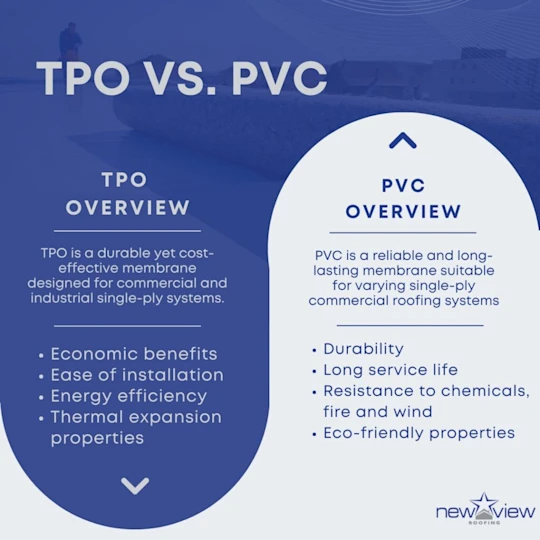
PVC is a roofing membrane used in a variety of commercial single-ply roofing applications. PVC roofing is commonly selected for characteristics that may include:
- Durability
- Potential for long service life when properly installed and maintained
- Resistance characteristics related to chemicals, fire, and wind depending on the system design
- Reflective roofing characteristics
TPO is a membrane commonly selected for commercial and industrial single-ply roofing applications. TPO is commonly selected for characteristics that may include:
- Cost-conscious roofing option
- Ease of installation
- Energy efficiency
- Thermal expansion properties
Here’s a quick overview so you can compare the two side-by-side.
| TPO | PVC | |
| Material | Made from rubber and plastic | Made entirely from plastic |
| Cost | Project costs vary depending on system design, installation requirements, and market conditions | Project costs vary depending on system design, installation requirements, and market conditions |
| Heat Resistance | Heat performance characteristics vary by product formulation and project requirements | Heat performance characteristics vary by product formulation and project requirements |
| Environmental Impact | Environmental considerations vary by product formulation, manufacturing processes, recycling availability, and end-of-life disposal methods | Environmental considerations vary by product formulation, manufacturing processes, recycling availability, and end-of-life disposal methods |
| Installation | Can be installed in many ways | Can be installed in many ways |
| Maintenance | Needs regular maintenance | Needs regular maintenance |
Don't Wait Until Damage Gets Worse.
How to Decide Between TPO and PVC Roofing
It can be tough to decide between TPO and PVC roofing materials for your commercial or industrial building. Here are a few factors you should consider:
- Both TPO and PVC roofing materials have different price points. TPO and PVC have different cost characteristics, and total project costs depend on system design, installation requirements, maintenance considerations, and market conditions, but it’s important to consider the long-term costs of each material before you make a decision. Don’t forget to factor in maintenance and repair expenses. If you’re having a tough time figuring out how much the long-term cost of either of these materials will be, give us a call. We can explain everything you need to know.
- It’s important that you choose a roofing material that has the durability you need. Although both TPO and PVC roofing systems are commonly used in commercial roofing, TPO and PVC have different performance characteristics related to puncture resistance, flexibility, and chemical exposure. The appropriate system depends on project requirements. If you believe your building’s roof will have a lot of foot traffic or there’s potential for damage from falling debris, the appropriate roofing system depends on project requirements, expected roof usage, exposure conditions, and building-specific factors. You can discuss this with your roofing expert when you call us for a quote.
- Environmental impacts. Environmental considerations for TPO and PVC roofing systems vary based on product formulation, manufacturing processes, recycling availability, installation methods, and end-of-life disposal practices. Property owners should evaluate these factors when selecting a roofing system.
- Think about the maintenance requirements of TPO and PVC before you make a decision. Regular inspection and maintenance are generally recommended for both TPO and PVC roofing systems. However, specific maintenance tasks may be different for each, which means you should talk to our roofing experts to find out which one is the right choice for you.
What is the Process for Installing a TPO or PVC Roof?
Although the process for installing a new roof will depend based on several factors, including the building’s size, style and shape — and the type of roofing system you’re having installed — the process usually looks like this:
- Inspection, evaluation and planning. The first step in any commercial roofing project is for us to inspect the existing roof and evaluate its condition. We’ll look for any signs of damage, wear or leaks, and we’ll make recommendations based on what we find. After we’ve evaluated your roof, we’ll work with you to design a new roofing system that meets your needs and your budget. That generally involves choosing between TPO and PVC, designing a drainage system and planning for necessary modifications to your roof’s structure.
- Permits and approvals. We’ll get the appropriate permits and approvals from local authorities, building owners and everyone else we need them from.
- Tear-off and prep. If your existing roofing needs to be replaced, we’ll begin by tearing off the old roofing material and preparing your roof deck for a new roofing system. Sometimes, that involves removing old insulation, repairing structural damage and cleaning the roof’s surface.
- After your roof is prepared, we’ll begin installing your new roofing system. We’ll put in insulation, lay the new roofing material and install any necessary accessories, such as vents, skylights and HVAC equipment.
- Cleanup and maintenance. After we’re done installing your new roof, we’ll inspect it thoroughly. Then, will clean up the job site and remove any debris. We’ll also provide you with instructions for ongoing maintenance and let you know you should call us periodically for inspections so we can help monitor the condition of the roofing system over time.
New View Roofing has access to commercial roofing products from established manufacturers used throughout the industry. If you’re trying to decide between a TPO or PVC single-ply roofing membrane for your commercial roof, our team of experts will help you make an informed decision.
Free Roof Inspection
Regular roof maintenance may help identify issues early and support the long-term performance of your roofing system. As a trusted Dallas roof repair contractor, New View Roofing will give you peace of mind that your roof is protected.
