


If you own or manage a commercial property, your roof plays a critical role in protecting your building, assets, and operations. Over time, even the most well-constructed roofing systems can develop issues that are not immediately visible. Without proper attention, small problems can turn into costly repairs or even premature roof replacement. This is where a professional commercial roof inspection becomes essential.
At New View Roofing, we provide thorough and reliable commercial roof inspection services designed to identify potential issues early and help you make informed decisions about your property. Whether you are maintaining your building, preparing for a sale, or addressing a suspected problem, our team is here to help evaluate your roof’s condition and performance.
Schedule your inspection with New View Roofing today and take the first step toward protecting your investment with our trusted commercial roof inspection services.
Table of Contents
Free Roof Inspection
Regular roof maintenance can extend the lifespan of your roof and save money on a premature replacement. As a trusted Dallas roof repair contractor, New View Roofing will give you peace of mind that your home is protected.
Roofing Insurance Claims: What Does Insurance Cover?
Understanding your eligibility for roofing insurance claims before storm damage occurs can help you avoid delays and unexpected out-of-pocket expenses later. Many homeowners are unaware that insurance carriers often evaluate not only the source of the damage, but also the age, condition, and maintenance history of the roof before approving a claim. Since policies vary significantly between providers, working with an experienced roofing contractor during the claims process can make a substantial difference.
A professional roofing company can inspect your roof, document storm-related damage, and provide information that may assist during the insurance claim process.
Your insurance company may cover roof repairs or roof replacement, and you can typically find information on the roof insurance claim process and coverage in the fine print of your insurance policy.
Many insurance companies cover roof insurance claims related to:
- “Acts of God,” which are events outside human control
- Falling objects
- Fire
- Hail
- Lighting strikes
- Vandalism
- Wind
However, your insurance company may choose not to cover your roof insurance claim if your roof is old or if you haven’t maintained it properly. Likewise, insurance companies typically don’t cover intentional or accidental damage, or if your policy has windstorm or hail exclusions. You should read your policy thoroughly to see what your insurance company will cover, and what it won’t.
Does Homeowners Insurance Cover Roof Leaks?
Homeowners insurance may cover roof leaks, but only if they’re caused by a covered peril. Every insurance policy is different, so you need to check with your insurer to be sure. When a homeowner’s insurance policy does cover roof leaks, your insurance company will pay to make the repairs. However, you do need to know that most homeowner’s insurance policies do not cover damage due to a lack of maintenance or standard wear and tear.
In many cases, insurance companies distinguish between sudden damage and long-term deterioration when evaluating roof insurance claims for water leaks. For example, a leak caused by a severe hailstorm or fallen tree branch may qualify for coverage, while leaks caused by aging materials or neglected repairs may not. This is one reason why regular roof inspections are so important for homeowners.
Keeping maintenance records and addressing minor roofing issues promptly can help strengthen your position if you later need to file a roof insurance claim. Proactive maintenance may also help extend the lifespan of your roof and reduce future repair costs.
How to Get a New Roof Through Roof Damage Insurance Claims
Your insurance company may pay for a completely new roof on your roof damage roof insurance claim. However, the only way to get your insurance company to replace your roof (or, rather, to get your insurance company to pay for an all-new roof) is to show that it was significantly damaged by something that’s covered in your policy. The damage must be so severe that repairing your roof isn’t feasible, or that it would make more financial sense to replace the roof.
Timing plays a major role in the success of a roofing insurance claim. After a major storm, insurance companies often receive a large volume of claims within a short period, which can lead to processing delays and limited adjuster availability. Scheduling a professional roof inspection as soon as possible allows homeowners to document damage early and begin the claims process before conditions worsen. Fast action can also help prevent secondary issues such as mold growth, water intrusion, insulation damage, or structural deterioration inside the home.
Generally, to get your insurance company to approve a roof insurance claim, you must:
- Thoroughly document the damage before making a roof damage roof insurance claim from a storm. Your roof inspector will take several pictures, including photos of what caused the damage (such as a fallen tree). You should try to take these pictures before you make any temporary repairs to the roof, such as putting up a tarp to protect your belongings.
- Reach out to your insurance company immediately. You should let your insurer know that your roof has been damaged and explain the extent of the damage (to the best of your knowledge). You should also confirm with the person on the phone whether the damage is covered, as well as ask how long you have to file a claim. Additionally, if your roof damage was caused by vandalism or another criminal act, you should file a police report before you contact your insurance company for a roof damage insurance claim.
- File the appropriate paperwork to get your claim started. Your insurer will provide you with the forms you need to fill out to make a claim. As soon as your paperwork is filed, the insurance company can begin the roof insurance claim process.
- Hang on to your receipts. When you pay for any repair work on your home, make sure to get receipts. You’ll need to submit them to your insurance company, and they may reimburse you. Try to wait to have professional repairs done until you’ve spoken with your insurance company – your insurer may have a list of approved contractors, or they may need to speak with the company you’ve chosen to work with before approving repairs. Additionally, if you must stay in a hotel because your home is uninhabitable, save those receipts as well – your insurance company may reimburse you.
- Prepare for a visit from an insurance adjuster. Your insurance company may send out an adjuster – a trained professional who will assess the damage to your roof for your roof damage insurance claim. The adjuster will take several photos of the damage, what caused the damage (if possible), and the area around your home. The purpose of the insurance adjuster’s visit is to determine how extensive the damage is, as well as evaluate the approximate cost of repairing or replacing the roof.
Free Roof Inspection
Regular roof maintenance can extend the lifespan of your roof and save money on a premature replacement. As a trusted Dallas roof repair contractor, New View Roofing will give you peace of mind that your home is protected.
Working With New View Roofing: What’s the Roof Insurance Claim Process?
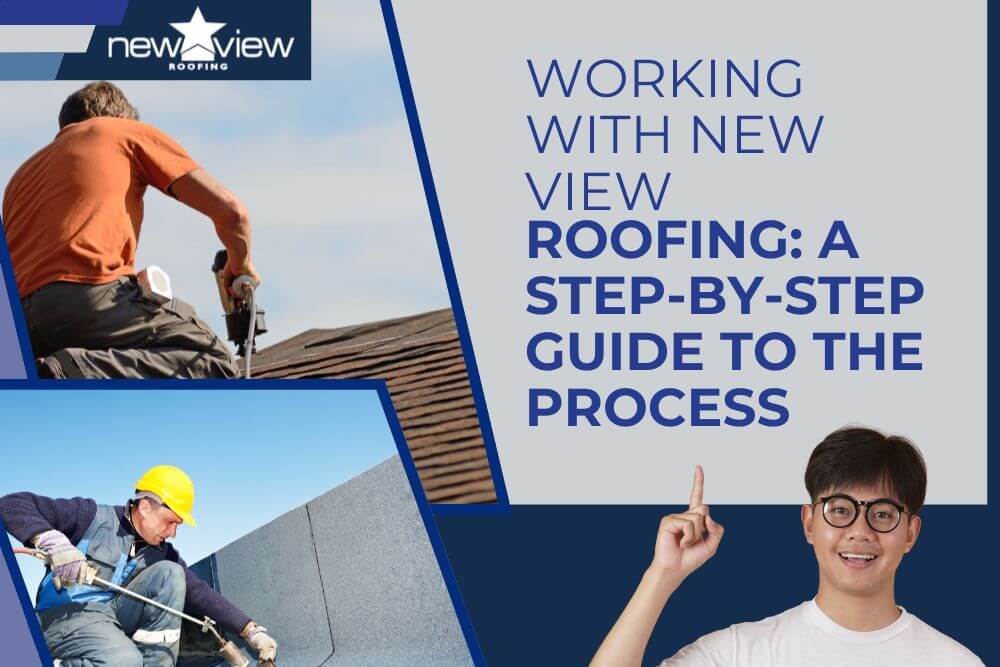
An experienced roofing contractor can inspect storm-related damage and provide documentation that may assist during the insurance claim process. When you work with New View Roofing, it’s a six-step process that looks like this:
- Roof inspection
- Filing a roof insurance claim
- Meeting the insurance adjuster
- Reviewing and signing the agreement
- Revising the claim (if necessary)
- Roof repair or replacement
Here’s a closer look at each step of the roof insurance claim process.
Roof Inspection
A certified New View Roofing manager will inspect your roof for damage.
Your inspector will look at your roof from its exterior and its interior, and he or she will check for leaks that need to be stopped immediately, potential danger areas, and structural problems, as well as a wide range of other problems.
Having a knowledgeable roofing professional conduct a roof inspection can also help ensure that storm-related damage is accurately identified and documented. Some forms of roof damage, including hail bruising, lifted shingles, compromised flashing, or hidden moisture intrusion, may not always be obvious during a brief inspection. An experienced roofing contractor can point out problem areas that could otherwise be overlooked and help homeowners better understand the scope of recommended repairs.
Filing a Roof Insurance Claim
Your personal project manager will provide you with all the evidence you will need to submit with your new roof insurance claim. If you have questions about your roof, your manager can give you the answers you need. He or she can also help you explain the extent of your roof’s damage to the insurance company.
Meeting the Insurance Adjuster
Your insurance company will send an adjuster to your property to confirm the damage. If requested, a New View Roofing manager can be available during the inspection to answer questions about the roof and discuss the scope of any recommended repairs. Our goal is to help document visible roof conditions and discuss the proposed scope of recommended repairs during the inspection.
Reviewing and Signing the Agreement
After you receive your insurance paperwork, your project manager will review the items to ensure everything is included and provide an agreement of the work to be completed. If there are any discrepancies, your project manager will get clarification through you and your insurance company. Once the scope of work is finalized, we’ll walk you through the project details and answer any questions before work begins.
Additional Roof Documentation
In some situations, additional roof damage may be discovered during the project. If that happens, New View Roofing can provide updated photos, documentation, and estimates related to the work being performed.
Roof Repair or Replacement After a Roofing Insurance Claim
Your New View Roofing manager will coordinate with you to schedule your new roof installation, and will complete the agreed-upon scope of work based on the final project agreement.
We are dedicated to providing exceptional customer satisfaction throughout the roof insurance claim process and will follow up after any repairs or replacement to ensure your roof meets your expectations.
When to File a Storm or Hail Damage Roof Insurance Claim
Storm or hail damage is not always immediately visible after severe weather passes through an area. In some cases, roofing problems develop gradually over time due to hidden moisture penetration, weakened shingles, or compromised structural components. Even minor storm damage can worsen if left untreated, especially during periods of heavy rain, high winds, or fluctuating temperatures.
Schedule a professional storm damage roof inspection with an experienced roofing company after extreme weather. We help homeowners identify issues early, prevent more extensive repairs, and determine whether insurance coverage may apply before filing a storm or hail damage roof insurance claim with their provider.
Although it’s not always easy to tell if your roof has been damaged after a storm – let alone decide whether you should call your insurance company and file a claim – you may be able to detect some damage from the ground. But the best way to determine whether your roof has been damaged from storm or hail is to call New View Roofing after a storm and ask us to send out an inspector. We’ll be happy to inspect your roof after wind, rain, hail, snow, or any other potentially damaging inclement weather.
In the meantime, you can look at your roof from the ground to check for:
- Missing, broken, or cracked shingles. If you notice any issues with your shingles, even if something just doesn’t look right, you may want to have a professional roof inspection done.
- Visible “bald spots” on your shingles. Shingles are covered in tiny granules that protect them from the elements (and help them shed water). If your shingles look like they have bald spots, that may mean the granules have come off – and those shingles may need to be replaced.
- Loose debris on your roof. If you see tree branches or any other debris on your roof, you should have it inspected by an expert to make sure that there isn’t any roof damage from trees.
- Visible leaks. If your roof is leaking, it needs professional attention. Roof leaks never get better with time, and even a tiny leak can cause exponential damage to your roof. If a leak is bad enough, it can even compromise your home’s structural integrity.
Even if you don’t see any damage, it’s often a good idea to have a professional inspect your roof after a storm. That way, you’ll get a heads-up about any possible damage and be able to make repairs before they spiral out of control. When you maintain your roof and make small repairs as necessary, you can typically put off a complete roof replacement (and save yourself some money by doing so).
Contact Us for Roof Insurance Claims Assistance
Enjoy peace of mind with New View Roofing, helping homeowners understand the roof inspection and repair process during an insurance claim.
