


How to Tell if Your Roof Has Wind Damage from a Storm
Wind damage can occur during storms with strong winds, although the extent of damage varies depending on roofing materials, installation quality, roof condition, and storm conditions. Although well-constructed, high-quality roofing materials can stand up to storms better than their low-quality counterparts can, any roof is susceptible to damage during a Texas storm.
The most obvious sign that your roof has been damaged in a storm is a leak in your roof. You might see a few drops of water in your attic, or you may have a huge hole in your roof that’s gushing with water. If you’re like most people with storm damage, yours will be somewhere in between. However, one thing is for certain: Roof leaks should be addressed promptly, as they may worsen over time and can lead to additional damage if left unrepaired.
Keep in mind, windstorms can damage your roof without you even realizing it. In fact, windstorms can cause each of the following types of damage and more:
- Torn and dislodged shingles
- Loosened shingle granules
- Roof debris
- Impacts from hurled objects
- Backups in gutters and downspouts
- Moisture in your attic.
- Mold and mildew growth
For the long-term health of your roof, it’s important to recognize the less obvious signs that a windstorm may have damaged your roof.
Table of Contents
Free Roof Inspection
Regular roof maintenance can extend the lifespan of your roof and save money on a premature replacement. As a trusted Dallas roof repair contractor, New View Roofing will give you peace of mind that your home is protected.
Less Obvious Signs of Wind Damage
Besides for actual leaks (the obvious sign of a damage roof), you might also notice these other signs that your roof has been damaged in a storm. If you do, you should call a trusted local roofer to assess damage.
When and Why to Request an Inspection After Storms
You should call a trusted roofing contractor with inspection experience right away if you notice any of these signs of potential damage at any point after a windstorm:
- Missing shingles
- Bald spots on shingles
- Loose debris on your roof
- Dents in your shingles
- Clogged or broken gutters
- Visible moisture in your attic
- Mold or mildew growth
Free Roof Inspection
Regular roof maintenance can extend the lifespan of your roof and save money on a premature replacement. As a trusted Dallas roof repair contractor, New View Roofing will give you peace of mind that your home is protected.
Wind Damage: Roof Shingles Missing
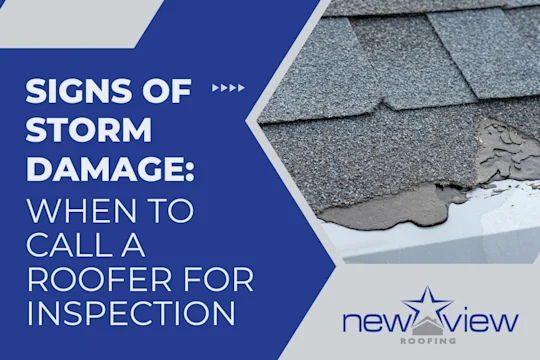
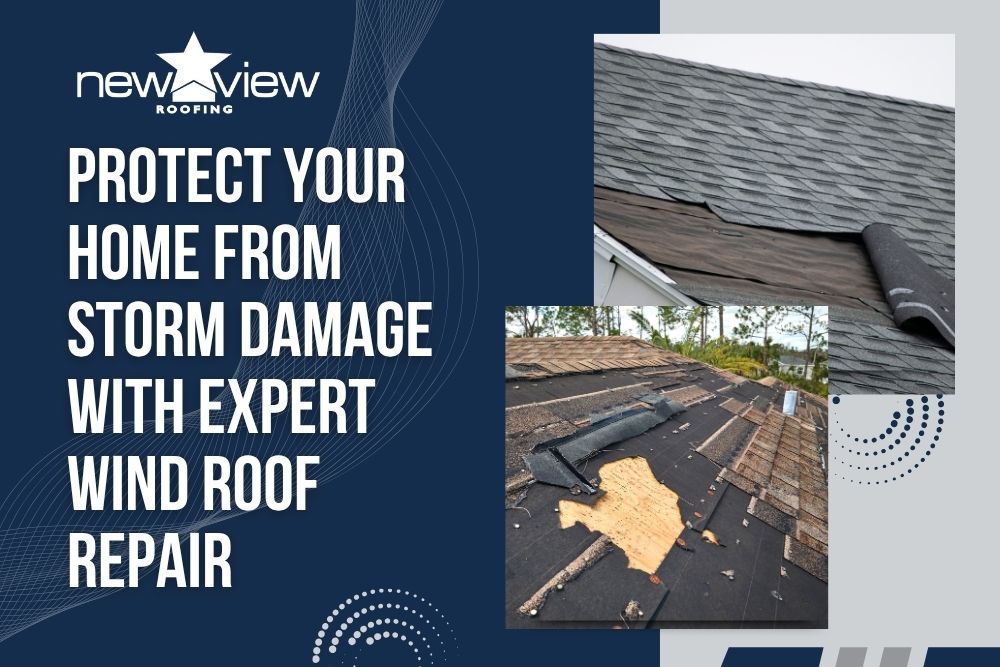
Windstorms can cause shingles to tear off roofs, resulting in missing shingles.
High winds can lift shingles from their fixed positions on your roof, and that’s a big problem. Your shingles are your roof’s first line of defense against the elements, and they protect several layers of roofing materials beneath them.
If your shingles are missing – or even if they’re slightly lifted after a storm – you should call a professional to check your roof for other signs of damage. Missing or dislodged shingles should be evaluated promptly by a qualified roofing professional to determine whether repair or replacement is appropriate.
Wind Damage: Roof Shingles Bald
Windstorms can lead to bald spots on shingles.
Asphalt shingles are covered in tiny granules that help them shed water and reflect the sun’s harmful UV rays. Over time, it’s natural for these granules to become loose or fall off, but after a storm, your shingles could lose a significant amount of their protective granular coating. Without this coating, your shingles will work less effectively, and your roof will lose much of its protection.
If you see what appears to be bald spots on your shingles, or if you find small shingle granules in your gutters or near your downspouts, you need to contact a roofing expert right away.
Wind Damage: Roof Shingles Debris
Windstorms can hurl debris at your roof leaving loose debris.
High winds can send debris – such as tree branches and other items – crashing into your roof. Although most roofs are strong enough to keep things from entering your home, the impact could cause damage to your shingles or roof tiles.
Wind-damaged roofing materials may become more susceptible to water intrusion over time. When water makes its way into your home, your house is susceptible to all kinds of other damage, including wood rot, mold growth, and other forms of property damage. If left unaddressed, prolonged water intrusion may contribute to structural damage.
Wind Damage: Roof Shingles Dented
Windstorms can lead to dented shingles.
Dents in your shingles are signs that foreign objects have impacted it, and that can cause serious problems – particularly if the impacts have loosened or dislodged your shingles.
If you notice dents in your shingles, cracks in your tiles or damage to any part of your roof, you should call a roofing expert as soon as possible to evaluate the extent of the issue. Dented shingles should be evaluated by a qualified roofing professional to determine whether repair or replacement is appropriate.
Wind Damage: Gutters Clogged or Broken
Windstorms can lead to clogged or broken gutters.
Clogged or broken gutters can cause serious problems for your home. After a storm, you should check your gutters as soon as possible.
Remove any clogs you find, because clogs interrupt the natural flow of water. When water can’t flow through your gutters, it overflows – and in some cases, damp piles of leaves and debris sit up against your house. These damp piles can cause moisture to permeate the wood supporting your roof, and that can lead to mold or wood rot. Both of these issues can compromise your roof’s integrity.
Broken gutters are an equally serious problem, but for different reasons. Your gutters’ only job is to guide water safely through a downspout and away from your home’s foundation. If they’re broken, they can’t do that – and that means water will spill over into the soil around your home. Improper drainage may contribute to moisture intrusion around the foundation and could increase the risk of foundation-related issues over time.
Wind Damage: Visible Moisture
Windstorms can lead to moisture in your attic.
Check your attic for signs of moisture. That doesn’t necessarily mean you see water dripping; signs of moisture include water-stained wood on the rafters, a moldy or mildewy smell (or visible growth), frost building up during the winter, or soggy insulation.
If you notice moisture in your attic, even if it just feels damp inside, you should contact a roofing pro right away – you may be able to head off major problems if you catch and treat the problem soon.
Wind Damage: Mold or Mildew Growth
Windstorms can lead to mold and mildew growth.
Mold and mildew growth may indicate the presence of excess moisture and should be evaluated. We strongly recommend that you get an inspection after a strong storm because if your roof is damaged in a windstorm, you might not notice small leaks. Without a roof inspection, you might not notice damage from wind damage at all until mold and mildew pop up in your attic. Both things indicate a moisture problem, and roofs and moisture don’t mix.
Check your roof, particularly in shady spots, for signs of mold or mildew. If you notice discoloration or spores, you should get in touch with a roofing expert as soon as you can. Likewise, if there’s mold or mildew in your attic, or if you notice stains on your ceiling or walls that could indicate mold or mildew growth, it’s time to call an expert to check your roof during a free inspection. We’ll evaluate the condition of the roof and discuss any recommended repair options.
Call Our Roof Repair Experts
After a storm hits your home, it can be overwhelming to know where to start with the restoration process. New View Roofing offers services in wind and storm damage repair to restore your property and protect it from future damage.
You can also fill out our online form or call us at 469-232-7220 and one of our friendly representatives will respond to you with 24 hours.
